
How Wehype wins deals with visual storytelling



Wehype connects game publishers and creators through its collaboration platform and agency services, helping them stand out in a crowded market. They run creator-driven campaigns with streamers and content creators, so presentations need to be high-impact and multimedia. For Wehype, a deck is never “just slides”; it’s how they sell strategy, communicate results, and align teams.
It’s also the first impression and proof of expertise that often gets passed around after a call. Diogo Pereira, Director of Partnership Operations & Strategy, is hyper-aware of this: “When you’re pitching, first impressions matter. If your deck feels lazy, clients will think your work is lazy too.” But he’s also seen the flip side: “We’re certain that we’ve been chosen as a partner on major campaigns due to the quality of the upfront proposal.”
Since 2021, their decks have been built in Pitch. What started as a tool for slides has become a core part of Wehype’s workflows, from first proposals to reports and how clients experience the brand.
Turning complex ideas into clear, confident stories
Wehype’s proposals are dense by nature. They cover everything from audience insights and strategies to formats, budgets, and expected impact. The temptation is to cram everything in.
“One mistake is overloading slides with a lot of information,” says Diogo. To avoid that, the team treats deck creation like a craft in their Pitch workspace. They deliberately start wide, then cut hard. Pitch is where the transformation from everything to essential happens.
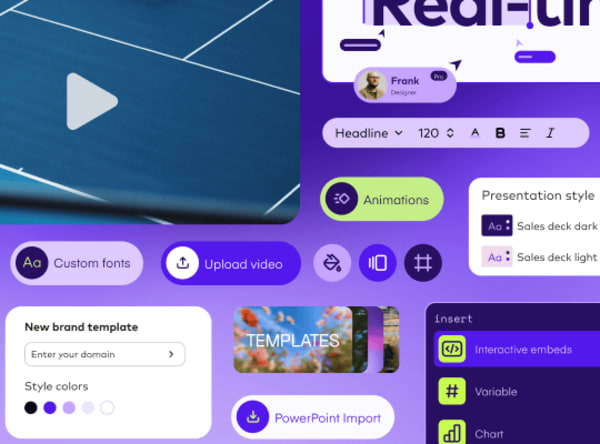
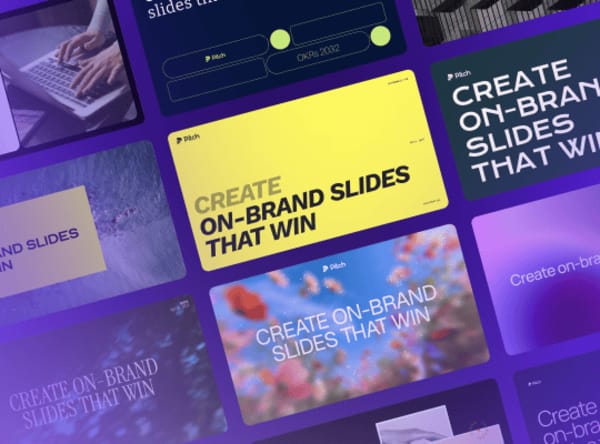
From there, they refine and elevate their message. They move content into clean layouts, use their brand library to make everything feel like Wehype, and add multimedia assets or interactive embeds. For Diogo, the stakes are obvious: “Clients expect a certain level of visual polish and a clear narrative flow.”
But it’s not just about aesthetics. It’s about trust. Pitch gives Wehype the environment to reach this standard consistently. By the time they send it, the deck is often half the size but exponentially more impactful than the first draft: sharper, more compelling, and something a client can actually use to make a decision.
The GTM motion that runs inside Pitch
Behind every clean story is a messy internal reality. Multiple teams, different perspectives, and people working across time zones.
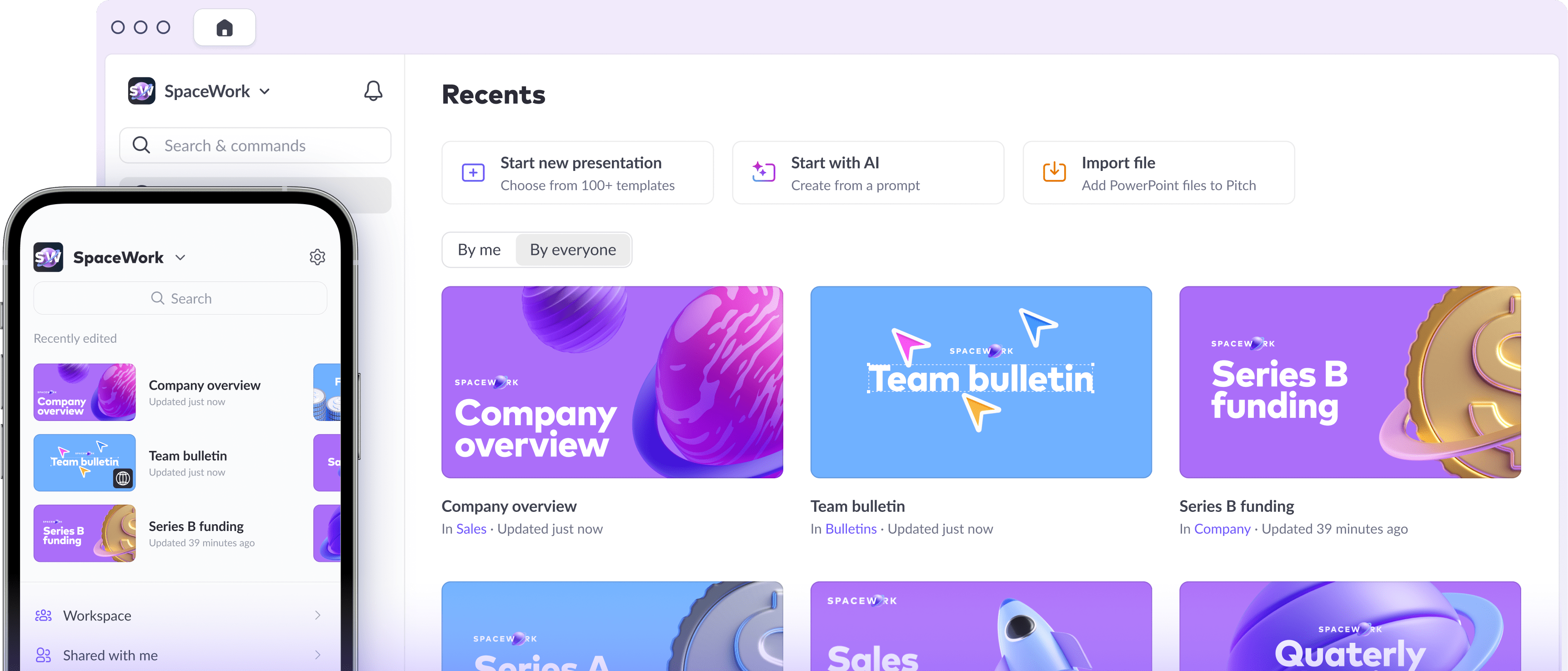
For Wehype, big opportunities are handled by small, focused task forces. Once there’s a direction for a project, everything moves into Pitch. From that point, the deck becomes the workspace: Success shapes the narrative, data adds charts, the creator team drops in real examples, and marketing refines the framing. Much of the company is distributed, so this work happens asynchronously. Diogo shares, ”Pitch makes it very easy to work with others, with collaboration happening inside the platform.”
Slide assignments and statuses keep projects moving. Instead of sifting through comments on various tools or guessing who touched what, the team sees the state of the deck instantly. Kevin Krooks, Marketing Lead, adds: “Most teams lose time not on the work itself, but on the coordination of the work. Pitch changes that. You can see ownership, progress, and gaps at a glance, meaning the team is fully aligned and their attention stays on shaping the narrative.”
“Most teams lose time not on the work itself, but on the coordination of the work. Pitch changes that.”
And because Wehype’s work is data-heavy, variables have become second nature. They let the team update a data point once and automatically sync it across the entire deck, cutting down on tedious manual edits and human mishaps.
Team members can jump into and work on presentations with confidence, knowing that everything they need is already there, and multiple people can work inside the same deck without breaking it. Slide assignment makes ownership explicit. Comments resolve questions quickly. Version history means the team can experiment freely, knowing they can always revert back. Together, this creates an asynchronous workflow in which Wehype doesn’t need to depend on additional planning or communication tools to progress the presentation.
Shifting from “here’s a file” to “here’s an experience”
Eventually, every deck has to leave the team. This is where most companies fall back into old habits: export a PDF, attach it to an email, hope for the best.
To avoid overwhelming clients with a single monster presentation, Wehype wanted to break big proposals into multiple decks, but this would mean juggling several links and files to tell a single story.
They needed a better first touchpoint. “A lot of people forget decks are a communication medium,” says Kevin. “If you want to signal professionalism and trust, it’s important that you showcase that in everything that you do.” Pitch rooms gave them a way to make proposals more digestible, more controlled, and more impressive.
Instead of a 50-slide mega-deck, Wehype now curates a digital room featuring the client’s logo, clear next steps, and all relevant decks and assets grouped into clean sections. The core narrative stays focused, while deeper details sit one click away.
Because they’re sharing slides instead of static PDFs, they include interactive embeds, animations, and videos that engage their audience. As Kevin puts it, "A PDF freezes your story in time. It can’t guide your audience, can’t react to their needs in the moment, can’t pull them in. Pitch rooms feel alive and let us build an experience, not just send a file.” And by setting up a custom domain with Pitch, every room and deck now lives under wehype.com. There’s no jarring “What’s this tool?” moment; everything looks and feels like Wehype from start to finish.
“Pitch rooms feel alive and let us build an experience, not just send a file.”
Rooms are shared via a live link, so the team can update slides and files even after they’ve been sent. The result? An always-current, always-on brand experience for their clients.
Reading the room with analytics
The other advantage of sending live links and rooms instead of files is the intelligence that comes back.
With Pitch analytics, Wehype can see when someone opens a deck, revisits it, or spends more time on specific parts. That’s especially useful in multi-stakeholder deals, where the real selling happens when you’re not on the call. As Kevin says, “If we know that a client has viewed a presentation ten times, they’re probably interested, and we can expect someone to get back to us. That kind of intel is super helpful.”
Those signals shape how and when they follow up; which stakeholders to prioritize, which parts of the story to clarify, where to go deeper. Instead of guessing, the team can focus their energy where interest is clearly highest.
Turning decks into a competitive advantage
For Wehype, Pitch is where complex ideas turn into clear, confident stories; and where those stories turn into trust, deals, and long-term partnerships. Looking ahead, Wehype continues to expand and launch more products to help games grow through reward systems: a new category they’re calling Rewarded Content. Sitting at the intersection of paid and organic, this is the value created when games, creators, viewers, and players all share in what they build together.
Pitch is how they’ll bring this concept to life, with decks that make that win–win scenario more tangible. With Pitch, every Wehype presentation becomes a dynamic, on-brand experience instead of a static file. And in a world where slide decks are often the main touchpoint for buyers, this shift makes all the difference.
Want to know more about Pitch? Take a product tour, or feel free to reach out.
Spread the word